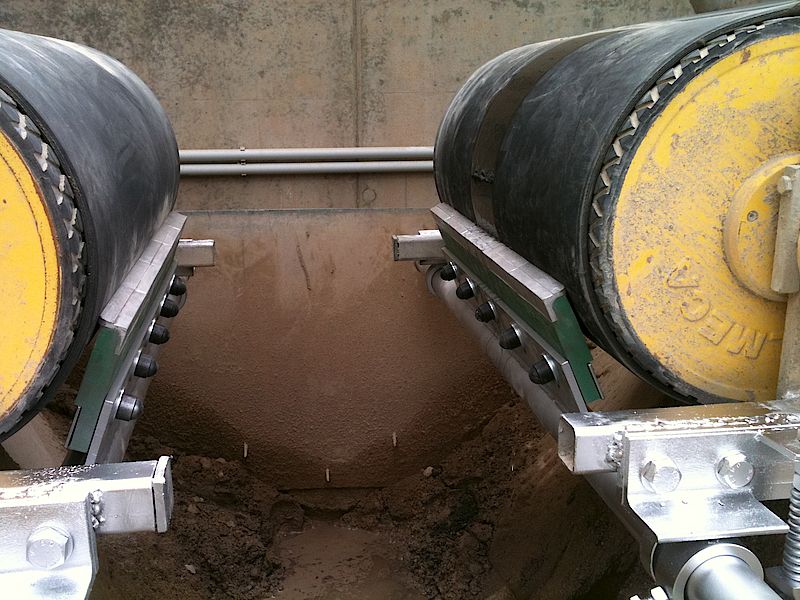
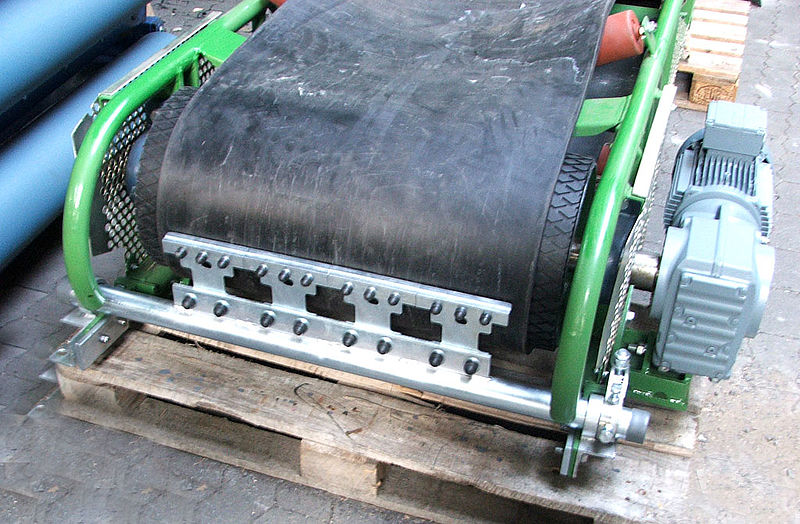
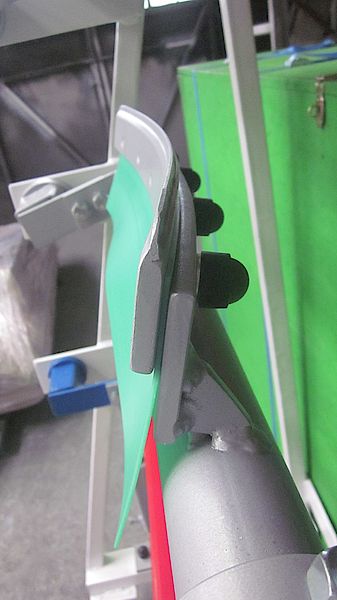
Highly flexible thanks to PU-hard metal segments, designed specifically for tough stuck-on material or in difficult or tight spaces, resilient segments
Constant uniform contact pressure thanks to a compression spring (automatically regulates the contact pressure)
High cost savings (barely any cleaning below the conveyors, reduces misalignment, prevents dirt sticking to drums and carrying rollers)
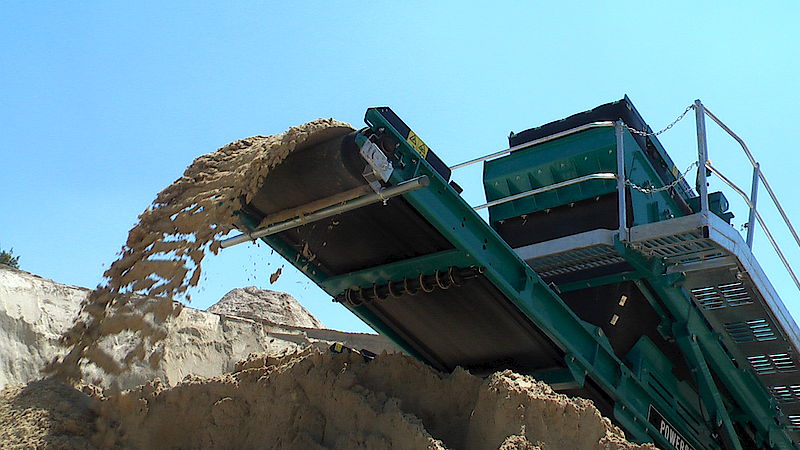
Areas of application: Sand, gravel, clay, brickworks, asphalt mixing plants, plaster, cement, glass industry, recycling, compost, incineration, sand-lime brick, steelworks, coal mining, iron ore
Secondary scrapers
For efficient conveyor cleaning:
Gentle on the belt
Require little space
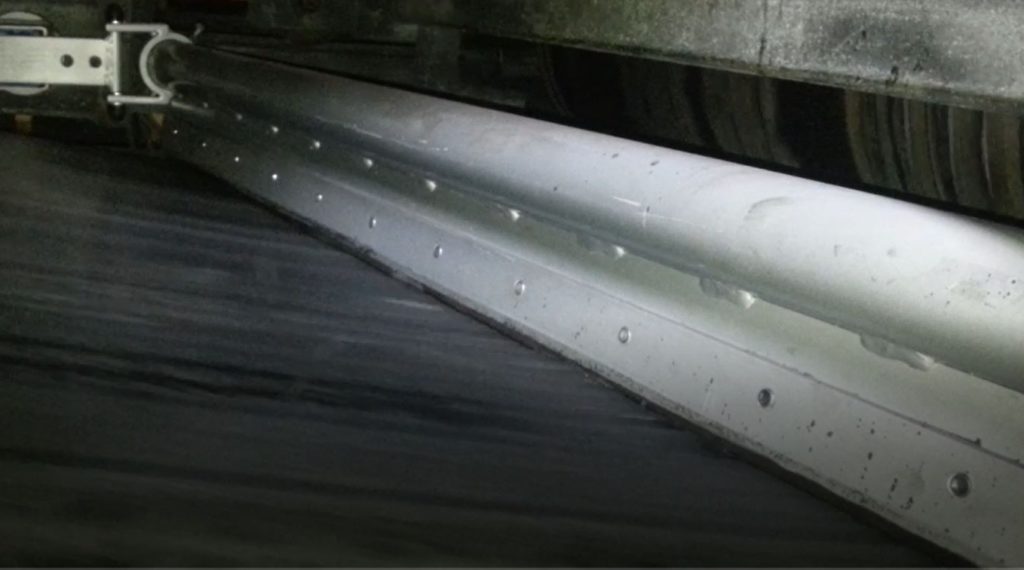
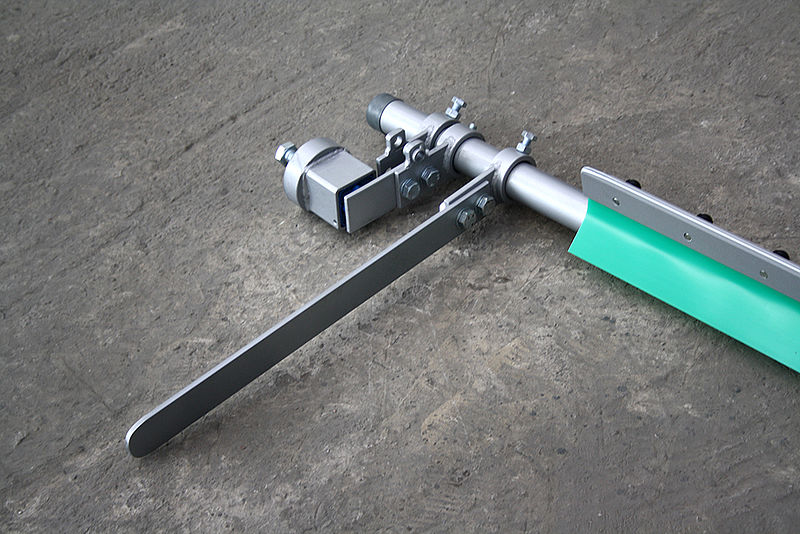
Consistently high-quality hard metal bar with constant uniform contact pressure thanks to rubber rotating elements (automatically regulates the contact pressure)
High cost savings (barely any cleaning below the conveyors — the secondary belt scraper reduces misalignment and prevents dirt sticking to drums and carrying rollers
Areas of application: Sand, gravel, clay, brickworks, asphalt mixing plants, plaster, cement, glass industry, recycling, compost, incineration, sand-lime brick, steelworks, coal mining, iron ore
Interior Seatbelt Wiper
However, just as bottom belt scrapers are used on the inner belt, this prevents dirt from sticking and damages to the idler drum.
Quick-Clean Squeegee
Same as the lower belt scraper, with the following difference: The scraper can be folded down or removed from the conveyor belt without the use of tools for cleaning.
Heat-Resistant Scraper
Such as drum scrapers, for use at temperatures ranging from 65 °C to 270 °C, e.g., mixing drums in asphalt mixing plants.
Curved Squeegee / Curved Wiper
Same as a standard scraper, but with a curved edge.
Heated scraper
Same as the lower belt, except that the scraper is heated to prevent icicles from forming or material from freezing to the scraper.